













Talking to AI agents is one thing — what about when they talk to each other? New startup BAND debuts ‘universal orchestrator’

For the past eighteen months, the corporate world has been obsessed with the “builder” phase of the generative AI revolution. Enterprises have raced to deploy autonomous agents to handle everything from customer support to complex codebase refactoring.
However, as these digital workers proliferate, a new, more structural problem has emerged: fragmentation. Agents built on LangChain cannot easily hand off tasks to those built on CrewAI; a Salesforce-embedded agent has no native way to coordinate with a custom-built Python script running on a private cloud.
Today, a new startup, BAND (also known as Thenvoi AI Ltd.) exited stealth with $17 million in Seed funding to provide the “interaction infrastructure” necessary to turn these isolated tools into a unified, collaborative workforce.
“In order for agents to become real players in the global economy, they need ways to communicate, just like humans do,” said co-founder and CEO Arick Goomanovsky in an interview with VentureBeat, continuing, “the communication solutions we have today for systems don’t work for agents, because agents are non-deterministic creatures. It’s not just about API integrations.”
By introducing a deterministic communication layer that functions as a “Slack for agents,” BAND aims to move the industry from a collection of fragile experiments to a scalable, “agentic economy”.
Introducing the ‘agentic mesh’
At the core of BAND’s thesis is that simply creating and plugging AI agents into human communication tools like Slack causes them to lose context or require constant “rehydration” if they fail and re-enter a conversation.
“You can’t take a bunch of agents and put them into Slack and expect it to miraculously work,” Goomanovsky said.
BAND solves this through a two-layer architecture designed to handle the unique telemetry of AI-to-AI interaction, a so called “agentic mesh.”
This is the “interaction layer” where agent discovery and structured delegation occur. It allows agents to find one another across different clouds and frameworks without requiring developers to write brittle “glue code” for every new connection.
-
Multi-Peer Collaboration: Unlike existing protocols that are primarily peer-to-peer or client-server, BAND supports full-duplex, multi-peer communication. This allows a group of agents—for example, a planning agent, a coding agent, and a QA agent—to work together in a shared “room” with synchronized context.
-
Deterministic Routing: Notably, BAND does not use Large Language Models (LLMs) to route messages. Using an LLM for routing would introduce the same non-deterministic errors the platform seeks to solve. Instead, the platform uses a patent-pending multi-layer architecture to ensure messages reach their destination reliably.
-
The WhatsApp Comparison: To handle the anticipated volume of agentic traffic, BAND’s infrastructure is built on the same technical stack utilized by global messaging giants like WhatsApp and Discord. This ensures the platform can scale to billions of messages as digital identities begin to outnumber human ones.
If the nesh is the “pipes,” the Control Plane is the “valve”. This layer provides the runtime governance that enterprises require before they can safely scale autonomous systems.
-
Authority Boundaries: The platform allows organizations to enforce strict rules on which agents can talk to each other and what topics they can discuss.
-
Credential Traversal: One of the most significant hurdles in multi-agent systems is identity. BAND manages how human permissions and security tokens traverse from agent to agent. For instance, if a human asks Agent A for information, and Agent A delegates that task to Agent B, BAND ensures Agent B only accesses data the original human is permitted to see.
Product, platform and pricing: scaling the multi-agent, multi-model workforce
BAND’s product suite is designed to be “framework-agnostic” and “cloud-agnostic,” positioning itself as an independent middleware that prevents vendor lock-in. In a market where hyperscalers like OpenAI or Anthropic want enterprises to stay within their specific ecosystems, BAND offers the flexibility to use the best model across multiple options for the job, including open source and fine-tuned, custom enterprise options.
“No matter where the agents run or how they were built, we can band them together, allow them to discover each other, delegate tasks, and have full-duplex, bidirectional communication,” Goomanovsky said, noting that despite competing first-part options from model providers like OpenAI’s workspace agents (announced yesterday) and Anthropic’s Claude Managed Agents (announced earlier this month), BAND “play[s] the role of the independent platform that allows an enterprise to avoid vendor lock-in.”
The company is currently seeing the most traction in “tech-forward” sectors, including telecommunications, financial services, and cybersecurity.
-
Coding Agents: This is currently the most popular use case. Developers often find that Claude is superior at planning, while Codex is better at reviewing code. BAND allows these agents to work simultaneously, delegating tasks to one another in real-time.
-
Customer Support and Operations: Beyond code, BAND enables “cross-boundary” automation. For example, a new employee could be onboarded by a Workday agent, which then communicates with a ServiceNow agent to open a ticket for equipment, which finally talks to a purchasing agent to finalize the order.
Understanding the sensitivity of enterprise data, BAND offers three primary ways to consume the platform:
-
SaaS: A straightforward cloud-based platform where agents connect via API.
-
Private Cloud/On-Premise: The entire platform can be deployed within a customer’s VPC or on-premise environment to ensure data never leaves their control.
-
The Edge: The infrastructure is lightweight enough to be deployed on “flying objects” like drones (UAVs) or even satellites, facilitating communication between agents in physically isolated environments.
Already, BAND’s early users — and enterprises more broadly — are mixing and matching AI agents powered by models from various providers, so the time to provide an overarching solution seems ripe.
As Goomanovsky put it: “Advanced developers are not using a single coding agent. They realize Claude is very good at planning, Codex is much better at reviewing, and today there is no way to create that bidirectional interaction between coding, review, and planning agents. We enable that.”
Licensing, governance, and pricing
BAND operates as a commercial entity, focusing on providing “enterprise-grade” stability and security. While the platform integrates with open-source frameworks like LangChain and CrewAI, its own core routing and control technology is proprietary and patent-pending.
For enterprise IT leaders, the “Control Plane” is less about communication and more about auditability. BAND provides full observability into every agent interaction, creating a transcript and a “paper trail” for autonomous actions.
This is a “complementary” solution to existing guardrail products; while a guardrail might protect a single agent from a prompt injection, BAND protects the entire system from cascading failures caused by one agent misinforming another.
The company has launched with a tiered pricing model designed to capture everyone from individual “agent enthusiasts” to global corporations:
-
Free ($0/mo): Designed for individuals. It allows for up to 10 remote agents and 50 active chat rooms, though it only retains data for 24 hours.
-
Pro ($17.99/mo): Aimed at startups and growing R&D teams. This tier increases limits to 40 agents and 250 active chat rooms with email support.
-
Enterprise (Custom): Offers unlimited agents, custom data retention policies to meet compliance requirements, and full API access to BAND’s “Memory APIs”.
Toward the ‘universal orchestrator’
The emergence of BAND coincides with a shift in how analysts view the AI market. Gartner has predicted that by 2029, 90% of enterprises deploying multiple agents will require what they call a “Universal Orchestrator”. Similarly, Forrester has recognized the “Agent Control Plane” as a distinct and emerging market category.
The company was founded by Goomanovsky and Vlad Luzin, who combined their backgrounds in Israeli intelligence, cybersecurity, and multi-agent systems to build BAND.
Goomanovsky views the platform not just as a tool, but as a foundational layer for the next era of the internet.
“Communication is the most fundamental problem in computing,” Goomanovsky noted. “When new beings emerge, the first thing they need is a way to talk to each other… We are the agent internet”.
The $17 million Seed round was led by Sierra Ventures, Hetz Ventures, and Team8. Tim Guleri of Sierra Ventures emphasized that BAND is building the “missing layer” that makes large-scale collaboration practical.
This capital will be used to expand the engineering team and accelerate the development of the “design partner” ecosystem, which already includes leading North American telcos and European digital payment companies.
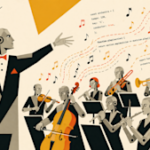
As agents transition from being digital novelties to becoming the primary drivers of enterprise workflows, the “glue code” that holds them together will become the most critical piece of the stack. BAND’s launch marks the first serious attempt to standardize that glue, turning a chaotic “band” of agents into a synchronized, governed symphony.
The post Talking to AI agents is one thing — what about when they talk to each other? New startup BAND debuts ‘universal orchestrator’ appeared first on Tokention.


