











Best Penny Crypto to Buy in 2026: Top Picks for Smart Investors


Are you an investor looking for the best penny crypto to buy in 2026? Many people feel priced out of big-name coins and start looking at penny crypto as a way to get exposure without putting down a large amount of money. Still, a low price doesn’t always mean good value. Before you buy any penny crypto, you need to understand what you’re getting into, how these coins work, and what separates real projects from short-lived hype.
In this piece, we help you sort through the noise by breaking down the top penny cryptocurrencies to watch, why some stand out more than others, and what factors actually matter when picking a coin for your portfolio. We’ll also look at the risks, buying strategies, and market trends shaping 2026 so you can make choices based on logic, not excitement. Ready to see which penny cryptos deserve your attention and which ones you should avoid? Read on.

Top 10 Penny Cryptocurrencies for Smart Investors
RankCryptocurrencyCore ThemeCurrent Price (USD)Market Cap1VeChain (VET)Supply Chain & Enterprise Data$0.01013$871.01M2Hedera (HBAR)Energy-Efficient Public Ledger$0.1057$4.52B3Kaspa (KAS)High-Speed PoW BlockDAG$0.03889$1.19B4The Graph (GRT)Web3 Data Indexing$0.03589$383.22 M5Stellar (XLM)Cross-Border Payments/Remittances$0.20$6.72B6Cardano (ADA)Proof-of-Stake Blockchain$0.48$12.72B7TRON (TRX)Decentralized Content Sharing$0.068$27.98B8Polygon (POL)Ethereum Scaling Solution$0.75$1.24B9Shiba Inu (SHIB)Meme Coin with L2 Ecosystem$0.0000076$4.51B10Algorand (ALGO)Sustainable, Institution-Friendly Chain$0.12259$1.09B
Best Penny Crypto to Buy in 2026
Finding the best penny cryptocurrency in 2026 takes more than scanning price charts or chasing what’s trending on social media. We look at how each project works, who’s building it, and whether it has a real place in the market. Using that approach, we’ve narrowed down our best altcoin picks by focusing on utility, adoption, and long-term potential. Below, you’ll find the penny cryptos that stand out based on careful review, not hype.
1. VeChain (VET): Best for Supply Chain Management and Enterprise Solutions

VeChain is a leading enterprise-grade blockchain platform designed to enhance supply chain management and business processes. It utilizes distributed ledger technology (DLT) to provide a comprehensive view of an organization’s processes and products, streamlining complex supply chains for better transparency. By assigning a unique identity to physical products using RFID tags and sensors, VeChain allows businesses and consumers to track items through every stage of the supply chain in real-time. This capability is particularly vital for industries like luxury goods, agriculture, and pharmaceuticals, where verifying authenticity and quality is paramount.
The platform operates on a dual-token system consisting of VeChain Token (VET) and VeThor Token (VTHO). VET acts as the value transfer medium across the network, while VTHO represents the cost of using the blockchain, effectively separating the volatility of market speculation from the cost of computing power. This unique economic model makes it highly attractive for enterprise adoption, as companies can predict operating costs more accurately. Major global partnerships with firms like Walmart China, BMW, and LVMH demonstrate VeChain’s real-world utility and its potential longevity in the market compared to speculative assets.
ProsConsStrong enterprise partnershipsFaces competition from other supply chain platformsDual-token system for scalabilityAdoption is still limited to specific industriesReal-world use cases in supply chain trackingRelatively low market capitalization compared to competitors
2. Hedera (HBAR): Enterprise-Grade Blockchain for Sustainable Solutions
Hedera is a next-generation distributed ledger technology (DLT) platform that uses hashgraph consensus, a faster and more energy-efficient alternative to traditional blockchain. Designed for enterprise-grade applications, Hedera supports use cases in payments, identity verification, and supply chain management. Its unique architecture ensures high throughput, low latency, and minimal energy consumption, making it a sustainable choice for businesses.
The platform is governed by a council of global organizations, including Google, IBM, and Boeing, ensuring transparency and stability. Hedera’s native token, HBAR, is used for transaction fees, network security, and staking. This governance model, combined with its technical capabilities, positions Hedera as a leader in enterprise blockchain solutions.
Hedera continues to expand its ecosystem with applications in decentralizenextd finance (DeFi) and tokenization. Its focus on sustainability and enterprise adoption makes it a strong contender for investors seeking a reliable and scalable blockchain platform.
ProsConsEnergy-efficient hashgraph technologyLimited awareness among retail investorsStrong governance by reputable organizationsCompetes with established blockchain networksScalable and secure for enterprise use casesAdoption is still in early stages
3. Kaspa (KAS): High-Speed PoW Blockchain for Scalable Payments

Kaspa is a next-generation proof-of-work (PoW) blockchain that uses a block-DAG (Directed Acyclic Graph) structure to achieve unparalleled transaction speeds. Unlike traditional PoW systems, Kaspa’s architecture allows for parallel block creation, enhancing scalability without compromising security. This makes it an ideal platform for fast, low-cost payments and decentralized applications.
The platform is community-driven and open-source, fostering innovation and collaboration. Its focus on scalability and efficiency has positioned it as a unique player in the blockchain space. Kaspa’s native token, KAS, is used for transactions and network security.
Priced at 0.3 USD with a market cap of $1.19B, Kaspa offers a compelling investment opportunity for those interested in scalable PoW solutions.
ProsConsHigh-speed transactions with low feesLimited ecosystem compared to larger networksScalable PoW architectureFaces competition from PoS and hybrid modelsCommunity-driven developmentAdoption is still growing
4. The Graph (GRT): Web3 Data Indexing Protocol for dApps

The Graph is a decentralized protocol that simplifies blockchain data access for developers. It enables efficient indexing and querying of blockchain data, making it a critical component of the Web3 ecosystem. Developers use The Graph to create subgraphs, which are open APIs that power decentralized applications (dApps) in DeFi, NFTs, and more.
The platform’s native token, GRT, is used to incentivize indexers, curators, and delegators who maintain the network. Its utility and widespread adoption among developers have made it a cornerstone of the decentralized web. The Graph is expanding its reach with integrations across multiple blockchains, further solidifying its position as a key player in the Web3 space. Its focus on developer-friendly tools and scalability makes it an attractive investment for those interested in the future of decentralized applications.
ProsConsEnergy-efficient hashgraph technologyLimited awareness among retail investorsStrong governance by reputable organizationsCompetes with established blockchain networksScalable and secure for enterprise use casesAdoption is still in early stages
5. Stellar (XLM): Blockchain for Cross-Border Payments
Stellar is built for fast, low-cost payments, with a strong focus on cross-border transfers. It allows users to send value across borders in seconds, which makes it useful in regions where traditional banking is slow or expensive. The network is often used by payment providers and fintech companies looking for simple settlement solutions.
XLM powers transactions on the Stellar network and helps prevent spam by requiring small fees. Stellar does not try to do everything at once. Instead, it focuses on reliability, speed, and accessibility, which keeps the platform easy to use for both businesses and individuals. For investors, Stellar appeals to those who want exposure to payment-focused crypto projects rather than experimental platforms chasing trends.
ProsConsFast and low-cost cross-border transactionsFaces competition from Ripple and SWIFTStrong partnerships with financial institutionsAdoption is slower in some regionsFocus on underbanked populationsRegulatory challenges in certain markets
6. Cardano (ADA): Research-Driven Blockchain for Smart Contracts

Cardano is a proof-of-stake blockchain platform that emphasizes sustainability and research-driven development. It supports smart contracts and decentralized applications, making it a versatile platform for developers and enterprises. Cardano’s layered architecture ensures scalability, security, and interoperability.
The platform’s native token, ADA, is used for transactions and staking. Cardano’s focus on peer-reviewed research and academic collaboration sets it apart from competitors, ensuring a robust and future-proof ecosystem. The network supports smart contracts, decentralized finance, and NFTs. ADA holders can also stake their tokens to help secure the network while earning rewards, without locking up their funds.
ProsConsResearch-driven developmentSlower development compared to competitorsScalable and secure architectureLimited dApp ecosystem compared to EthereumStrong community and developer supportPrice volatility due to market conditions
7. TRON (TRX): Blockchain for Decentralized Content Sharing
TRON is a blockchain platform that focuses on decentralized content sharing and entertainment. It supports high-throughput transactions, making it ideal for applications in gaming, DeFi, and content platforms. TRON’s acquisition of BitTorrent and integration with DeFi protocols highlight its versatility.
The platform’s native token, TRX, is used for transactions and staking within its ecosystem. TRON’s focus on decentralization and user empowerment has made it a popular choice among developers and content creators. It is a strong contender for those interested in content-focused blockchain solutions.
ProsConsHigh throughput for content and gamingFaces competition from Ethereum and SolanaStrong ecosystem with DeFi integrationRegulatory challenges in some regionsActive community and developer supportPrice volatility due to market trends
8. Polygon (POL): Ethereum Scaling Solution
Polygon is a Layer-2 scaling solution for Ethereum, offering faster and cheaper transactions through sidechains and ZK rollups. It supports a wide range of applications, including DeFi, gaming, and NFTs. Polygon’s compatibility with Ethereum and focus on scalability have made it a popular choice among developers. The platform’s native token, POL, is used for transactions and staking. For those interested in learning more, explore our step-by-step tutorial on how to buy Polygon blockchain tokens.
ProsConsScalable and cost-effective Ethereum solutionFaces competition from other Layer-2 solutionsWide range of applicationsDependent on Ethereum’s successStrong developer and community supportPrice volatility due to market trends
9. Shiba Inu (SHIB): Meme Coin with Expanding Ecosystem
Shiba Inu is a meme-inspired cryptocurrency that has evolved into a full-fledged ecosystem. Its native token, SHIB, is complemented by LEASH and BONE tokens, which contribute to the platform’s growth. Shiba Inu’s low price and high supply make it an accessible option for retail investors.
The platform’s strong community, known as the Shib Army, has driven its popularity. Shiba Inu’s roadmap includes projects like ShibaSwap, a decentralized exchange, and Shibarium, a Layer-2 scaling solution. For those new to the ecosystem, check our complete tutorial on buying Shiba Inu to get started. With a market cap of $4.54B, Shiba Inu is a unique blend of meme appeal and utility.
ProsConsStrong community supportHigh supply limits price growthExpanding ecosystem with ShibariumFaces competition from other meme coinsAccessible for retail investorsPrice volatility due to market trends
10. Algorand (ALGO): Sustainable Blockchain for Enterprises
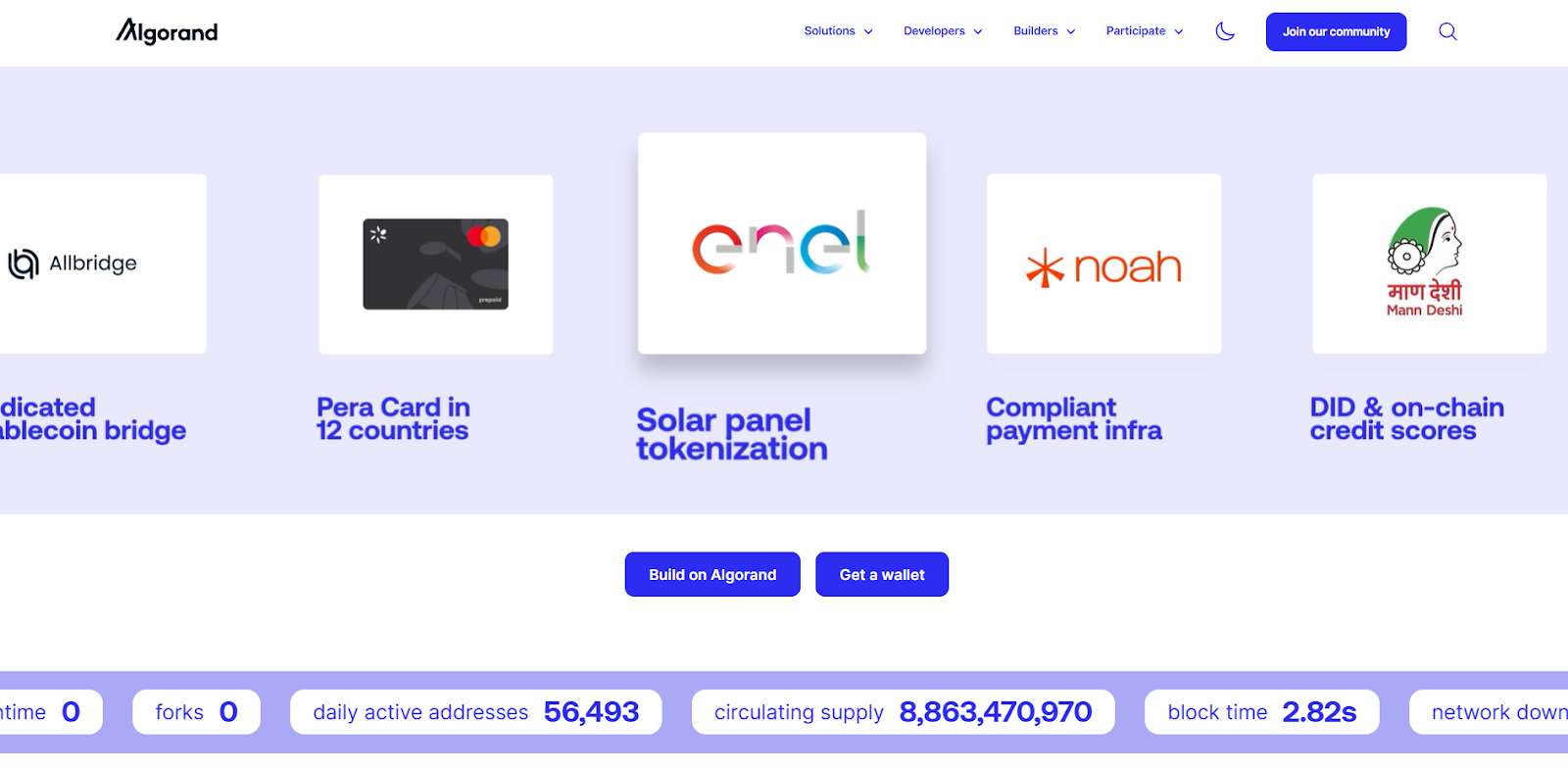
Algorand focuses on speed, security, and reliability. Its pure proof-of-stake system allows transactions to settle quickly while keeping energy use low, which appeals to environmentally conscious projects. The network supports smart contracts, token creation, and decentralized finance. Algorand has also drawn interest from institutions due to its consistent performance and predictable fees.
ALGO suits investors who prefer steady infrastructure growth over aggressive marketing and speculation.
ProsConsSustainable and energy-efficientFaces competition from other Layer-1 blockchainsVersatile for enterprise use casesAdoption is still growingStrong developer and community supportPrice volatility due to market conditions
What Are Penny Cryptocurrencies?
A penny crypto is a digital asset that trades at a very low price per token, often under one dollar. Many new investors are drawn to these coins because they feel more affordable than well-known cryptocurrencies like Bitcoin or Ethereum. The low price can create the impression of high upside, especially when people compare how many tokens they can buy with a small amount of money.
That said, price alone does not tell the full story. A penny crypto can have billions of tokens in circulation, which affects how much it can realistically grow. This is why factors like supply, use case, and adoption matter just as much as the price tag. Some penny cryptos support payment networks, smart contracts, or data services, while others exist mainly for trading and speculation.
Understanding what makes a coin trade at a low price helps you set realistic expectations. When you look beyond the number on the screen, you can better judge whether a penny crypto has long-term potential or is simply riding short-term interest.
Why Invest in Penny Cryptos?
Investing in penny cryptos can be an attractive option for those looking to explore the cryptocurrency market without committing significant capital. These digital assets, often referred to as penny coins, offer unique advantages that appeal to both new and experienced investors. Here’s why penny cryptos are worth considering:
High Growth Potential
A penny coin often has more room to grow compared to assets that already carry very large valuations. When a project is still early in its adoption cycle, new partnerships, product launches, or increased usage can have a noticeable impact on price. This potential becomes clearer when you look at the market cap rather than the token price alone. A low market cap paired with active development and real demand suggests the project has space to expand without needing unrealistic levels of adoption.
Still, growth is never guaranteed. Many penny coins fail to gain traction, which is why research matters more than optimism. Investors who focus on fundamentals instead of price movement alone are better positioned to spot meaningful opportunities.
Portfolio Diversification
Penny cryptos can help diversify a portfolio when used carefully. Instead of allocating all capital to a few large cryptocurrencies, some investors spread smaller amounts across multiple projects at different stages of growth. This approach can reduce reliance on the performance of a single asset.
Holding a popular penny crypto alongside larger crypto coins may also provide exposure to emerging sectors such as scaling solutions, data infrastructure, or payment networks. Diversification does not remove risk, but it can balance a portfolio by combining stability with growth-focused assets.
Low Barrier to Entry
Another reason investors explore penny cryptos is the low cost of participation. You can buy a significant number of tokens with a relatively small investment, which makes experimentation more accessible. This lower barrier allows new investors to learn how wallets, exchanges, and market cycles work without committing large sums upfront.
For experienced investors, the low entry point also makes it easier to size positions conservatively. You can gain exposure to a project’s upside while limiting potential losses if it does not perform as expected.
Advantages and Disadvantages of Penny Cryptocurrencies
While penny cryptocurrencies offer exciting opportunities for investors, they also come with their own set of challenges. Understanding both the advantages and disadvantages of investing in penny coins is crucial for making informed decisions. Here are the merits and demerits of penny cryptocurrencies:
Advantages of Penny Coin Investing
- Low Entry Cost: Penny cryptocurrencies, including meme coins, are affordable, allowing investors to purchase a significant number of tokens without a large upfront investment.
- High Growth Potential: Due to their low market cap, penny coins can experience rapid price increases if the project gains popularity or adoption.
- Diverse Options: The crypto market offers a wide variety of penny coins, from meme coins like Shiba Inu to utility-focused tokens, providing opportunities to diversify investments.
- Community Support: Many penny coins, especially meme coins, have strong and passionate communities that drive engagement and awareness.
- Speculative Gains: For risk-tolerant investors, penny coins can deliver substantial returns in a short period, especially during market rallies.
Disadvantages of Penny Coin Investing
- High Volatility: Penny cryptocurrencies, particularly meme coins, are highly volatile and can experience dramatic price swings, leading to potential losses.
- Limited Utility: Many penny coins, especially meme coins, lack real-world applications, relying heavily on hype and speculation for value.
- Scam Risks: The low barrier to entry in the crypto market has led to the creation of many fraudulent penny coins, making thorough research essential.
- Liquidity Issues: Some penny coins may have low trading volumes, making it difficult to buy or sell large amounts without affecting the price.
- Uncertain Longevity: Meme coins and other speculative penny cryptocurrencies often lack long-term development plans, increasing the risk of project failure.
How to Buy Penny Crypto Safely
Here are some essential tips to safely navigate the crypto industry and invest in penny crypto at a low price:
- Research the Project: Before investing, thoroughly investigate the penny crypto’s use case, team, and roadmap. Look for projects with real-world applications and active development.
- Check Market Cap and Liquidity: Focus on penny cryptos with a reasonable market cap and sufficient trading volume to ensure you can buy and sell without issues.
- Use Reputable Exchanges: Only purchase penny crypto from trusted and well-established cryptocurrency exchanges to avoid scams.
- Secure Your Wallet: Store your penny crypto in a secure wallet, such as a hardware wallet, to protect it from hacks and unauthorized access.
- Start Small: Begin with a small investment, especially if you’re new to the crypto industry, to minimize risk while learning the market.
- Monitor Price Trends: Keep an eye on the low price movements of your chosen penny crypto to identify the best buying opportunities.
- Diversify Your Portfolio: Avoid putting all your funds into a single penny crypto. Spread your investments across multiple assets to reduce risk.
How to Choose the Best Penny Cryptocurrency for Your Portfolio
Here are key factors to consider when selecting the best penny cryptocurrency for your portfolio:
- Evaluate the Use Case: Look for penny cryptocurrencies with real-world applications, such as powering decentralized finance (DeFi), enabling cross-border payments, or supporting blockchain ecosystems.
- Check the Market Cap: Focus on projects with a reasonable market cap that indicates growth potential without being overly speculative.
- Analyze the Team and Development: Research the team behind the project and their track record in the crypto industry. Active development and regular updates are positive indicators.
- Review Community Support: A strong and engaged community often signals long-term interest and adoption for the penny crypto.
- Assess Liquidity: Ensure the cryptocurrency has sufficient trading volume to allow easy buying and selling without significant price impact.
- Monitor Price Trends: Look for penny cryptocurrencies with a low price but consistent growth patterns, avoiding those with extreme volatility.
- Consider Partnerships and Integrations: Projects with established partnerships or integrations with other platforms often have a higher chance of success.
- Diversify Your Investments: Spread your funds across multiple penny cryptocurrencies to reduce risk and increase exposure to different sectors.
Investment Strategy for Penny Cryptos
Investing in penny cryptos can be highly rewarding, but it requires a well-thought-out strategy to minimize risks and maximize returns. Start by setting clear goals to define your investment objectives, whether it is short-term gains or long-term growth. Diversify your portfolio by spreading investments across multiple penny cryptos, including fixed supply meme coins and utility tokens, to reduce risk and increase exposure to different sectors.
Conduct thorough research by investigating the project’s fundamentals, such as its use case, team, roadmap, and market cap, and focus on those with real-world applications and active development. Begin with a small investment, especially if you are new to penny cryptos, to limit potential losses while gaining experience in the market. Monitor market trends, price movements, and news related to the crypto industry to identify opportunities and avoid pitfalls.
Protect your investment by using stop-loss orders to automatically sell your penny cryptos if their price drops below a certain level. Finally, stay updated on the latest developments in the crypto industry, including regulatory changes and technological advancements, to make informed decisions and navigate the volatile world of penny cryptos with confidence.
Market Trends Boosting Penny Crypto Growth in 2026
The year 2026 is shaping up to be a pivotal period for penny cryptocurrencies, driven by several key market trends. One of the most significant factors is the increasing accessibility of digital assets, as investors can now find the best crypto exchanges for penny cryptocurrencies purchasing. These platforms offer user-friendly interfaces, enhanced security features, and a wide selection of low-cost tokens, making it easier for both new and experienced investors to participate in the market.
Another trend is the growing adoption of blockchain technology across various industries, which has fueled interest in penny cryptocurrencies with real-world applications. Projects focusing on decentralized finance (DeFi), gaming, and supply chain management are gaining traction, attracting investors looking for innovative solutions.
Additionally, the rise of community-driven tokens, including meme coins, has highlighted the power of social media and online communities in driving demand and market growth. These communities play a crucial role in promoting awareness and fostering engagement, which can lead to significant price appreciation for penny cryptocurrencies.
Finally, advancements in regulatory clarity and technological innovation are expected to create a more stable and secure environment for crypto investments. As a result, investors are increasingly confident in exploring penny cryptocurrencies as a viable option for portfolio diversification and long-term growth.
Conclusion
Penny cryptocurrencies offer a mix of opportunity and risk that requires a careful approach. Some projects bring real utility, active development, and growing adoption, while others rely mainly on speculation. Focusing on fundamentals, use cases, and long-term viability helps separate meaningful investments from short-lived trends.
A low price alone should never drive a decision. Market conditions, project goals, and risk tolerance matter far more than how cheap a token appears. When researched properly and used as part of a balanced strategy, penny cryptos can play a role in a broader portfolio without taking on unnecessary exposure.
FAQs
What’s the best penny crypto to buy now?
The best penny cryptocurrencies to buy now include TRON (TRX), Cardano (ADA), Bitcoin Hyper (HYPER), TOKEN6900 (T6900), and Snorter Bot (SNORT). These coins stand out for their growth potential, strong community support, and innovative use cases.
Which platforms are best for purchasing penny cryptocurrencies?
The platforms best for purchasing penny cryptocurrencies include reputable crypto exchanges like Binance, Coinbase, and Kraken. These platforms offer a wide selection of tokens, secure transactions, and user-friendly interfaces.
Which penny crypto has 1000x potential?
The penny cryptocurrencies with 1000x potential are TOKEN6900 (T6900), Snorter Bot (SNORT), Bitcoin Hyper (HYPER), Bitcoin Bull (BTCBULL), and Fantasy Pepe (FEPE). These projects are highlighted for their unique features and market positioning.
Why should I invest in penny cryptocurrencies?
Investing in penny cryptocurrencies offers opportunities for high growth potential, portfolio diversification, and low entry costs. These assets are ideal for investors willing to take calculated risks in the evolving crypto market.
Which penny crypto will boom in 2026?
There is no specific penny cryptocurrency guaranteed to boom in 2026. However, projects like TRON (TRX), Cardano (ADA), and SpacePay (SPY) show promising potential based on their current development and market trends.



